



Will Top Grain Leather Peel? Understanding Top Grain Leather Durability
The question "does top grain leather peel?" comes from a valid concern—we've all seen leather furniture that flakes, cracks, and deteriorates into an unsightly mess. The confusion stems from materials marketed as "leather" that aren't actually quality leather, leading many shoppers to worry that all leather furniture will eventually peel apart.
Here's the straightforward answer: genuine top grain leather does not peel. It's a durable, long-lasting material that develops character over time rather than falling apart. What does peel is bonded leather, bicast leather, and other synthetic-based materials often sold under misleading names. Understanding this distinction saves you from both unnecessary worry about quality leather and expensive mistakes with inferior materials.
This guide explains exactly what makes top grain leather durable, why some "leather" products peel while others don't, how to identify quality materials, and what to expect from properly made leather furniture over its lifespan.
Why Top Grain Leather Doesn't Peel
To understand why top grain leather is durable and peel-resistant, you need to understand what it actually is. Top grain leather comes from the outermost layer of animal hide—the strongest, most fiber-dense part of the skin. This layer has evolved over millions of years to protect animals from the elements, and those protective qualities transfer to finished leather products.
During processing, the very top surface of the hide is lightly sanded to remove imperfections, then a protective finish is applied. The result is a material where the leather fibers remain intact and tightly interlocked. There's no separate layer that can delaminate because the material is fundamentally cohesive—it's leather all the way through.
The protective finish on top grain leather can wear over time with heavy use, but this manifests as gradual fading or smoothing—not peeling. Even when the finish wears, the underlying leather remains intact. This is fundamentally different from what happens with synthetic materials, where an outer layer literally separates from the base.

What Actually Peels (And Why It's Confused with Leather)
The peeling leather furniture that concerns shoppers is almost never top grain leather. It's typically one of these materials:
Bonded Leather
Bonded leather is the primary culprit behind peeling "leather" furniture. It's made from 10-20% leather scraps ground into a pulp and bonded to fabric with polyurethane. Despite containing some leather, it behaves like a synthetic material. The polyurethane coating cracks and peels within 2-5 years, revealing the fabric backing underneath. Because it's marketed with the word "leather," many people assume they're experiencing what all leather does—but they're not experiencing leather at all.
Bicast Leather
Bicast leather uses a split leather base (the lower, weaker layers of hide) topped with a thick polyurethane or vinyl coating. The coating provides the glossy, uniform appearance while the split leather adds minimal strength. Over time, the plastic coating peels away from the leather base, creating the telltale flaking appearance. It's real leather underneath, but the failure point is the synthetic layer on top.
PU/Faux Leather
Quality faux leather doesn't peel, but cheap versions do. Low-quality polyurethane coatings on fabric or synthetic bases degrade with heat, body oils, and friction. The coating cracks and peels, often within just a few years. Since some sellers misrepresent these materials as "leather" or use vague terms, buyers may believe they purchased actual leather.
If your "leather" furniture is peeling, it's almost certainly not top grain leather—it's bonded leather, bicast, or low-quality faux leather. Genuine top grain leather structurally cannot peel because it's cohesive material, not layers bonded together.
For a detailed comparison, see our guide explaining what bonded leather actually is.
The Leather Grade Hierarchy: Understanding Durability
Is top grain leather durable compared to other options? Understanding the leather hierarchy explains why top grain represents an excellent durability-to-value ratio.
Full Grain: The Gold Standard
Full grain leather retains the complete outer surface of the hide, including natural grain patterns and minor imperfections. It's the most durable leather available, developing a beautiful patina over decades. Full grain absolutely does not peel—it's too expensive to use inferior construction methods.
Top Grain: The Smart Choice
Top grain is full grain's slightly refined sibling. The surface is lightly sanded to remove imperfections, making it more uniform in appearance. This processing doesn't affect durability significantly—top grain leather is extremely long-lasting and completely peel-resistant. For most furniture applications, top grain offers the ideal balance of durability, appearance, and price. For more details, see our complete top grain leather guide.
Genuine Leather: Requires Careful Evaluation
"Genuine leather" is actually a quality grade, not just a material description—and it's lower than top grain. It can come from any layer of the hide and varies considerably in quality. Some genuine leather performs well; some doesn't. It's not inherently prone to peeling if it's solid leather, but the category includes enough variation to warrant careful evaluation.
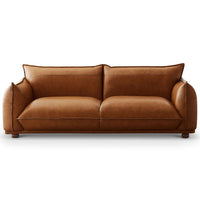
Featured: The Morrison Sofa
The Morrison Sofa exemplifies what quality top grain leather furniture should be—durable construction with leather that ages beautifully rather than deteriorating.


The Morrison features quality leather designed to develop character over years of use, not fall apart. The leather surface will soften, develop subtle color variations, and become more comfortable—the opposite of peeling and deteriorating.
This is what you should expect from properly made leather furniture: a piece that looks better with age, not worse.
View the Morrison SofaHow to Identify Quality Leather Before Buying
Protecting yourself from peeling "leather" means knowing how to verify what you're actually purchasing. These methods help distinguish genuine top grain leather from materials that will fail.
Read Specifications Carefully
Quality sellers clearly state "top grain leather" or "full grain leather"—not just "leather" or "genuine leather." If the listing says "bonded leather," "leather match," "bicast," or doesn't specify, assume it's not top grain.
Examine the Surface
Real leather has natural variation—slight color differences, subtle texture changes, and occasional minor marks. Perfectly uniform surfaces often indicate heavy correction or synthetic materials. Too-perfect usually means not-leather.
Use the Smell Test
Genuine leather has a distinctive, rich smell that's hard to replicate. Synthetics and bonded leather smell like plastic or chemicals. If possible, smell the material before purchasing—your nose is a reliable verification tool.
Check the Edges and Back
Real leather shows fiber texture at cut edges. Bonded leather shows fabric backing. If you can see where the material is cut or the back side, examine the structure—leather fibers versus fabric or foam immediately reveals the truth.
Perform the Flexibility Test
Real leather flexes naturally and develops soft creases when bent. Synthetic materials feel stiffer and may crack or crease sharply. Gently bend the material and observe how it behaves.
The price reality check: Genuine top grain leather furniture costs money. If a "leather" sofa is priced under $500-600, it's almost certainly not top grain. Material costs alone make this impossible. Suspiciously low prices often indicate bonded leather marketed misleadingly.
What Causes Wear in Top Grain Leather
While top grain leather doesn't peel, it does experience wear over time. Understanding what affects leather longevity helps you maintain it properly.
- Gradual softening and flexibility
- Subtle color deepening or lightening
- Development of natural patina
- Comfortable creasing at flex points
- Smooth wear on high-contact areas
- Excessive drying and cracking
- Significant fading from sun exposure
- Staining from neglected spills
- Surface scratches from sharp objects
- Color transfer from dyes/inks
Sunlight Exposure
UV light fades leather and can dry out the protective finish over time. Position leather furniture away from direct sunlight or use window treatments during peak sun hours. Fading from sun exposure isn't peeling—it's color change that's largely preventable with proper placement.
Dryness and Neglect
Leather contains natural oils that keep it supple. Over years without conditioning, these oils deplete and leather can become dry and prone to cracking (different from peeling). Regular conditioning—every 6-12 months—maintains leather's flexibility and appearance.
Friction and Wear
High-contact areas like seat cushions and armrests experience the most friction. Over time, this can smooth and slightly lighten the leather in these spots. This is normal wear that adds character rather than damage—similar to how beloved leather jackets develop distinctive patterns.
Caring for Top Grain Leather to Maximize Lifespan
Top grain leather is durable by nature, but proper care extends its lifespan and keeps it looking its best.
-
Dust and wipe weekly Use a dry or slightly damp microfiber cloth to remove dust, dirt, and body oils before they accumulate
-
Condition every 6-12 months Apply leather conditioner to maintain suppleness and prevent drying; more frequently in dry climates or with heavy use
-
Address spills immediately Blot (don't rub) spills promptly; most protected top grain handles liquids well if you act quickly
-
Avoid harsh cleaners Never use alcohol, bleach, or all-purpose cleaners on leather; these strip natural oils and damage the finish
-
Keep away from heat sources Don't position leather furniture near radiators, heating vents, or fireplaces; heat accelerates drying
For comprehensive maintenance instructions, see our leather conditioning guide.
What If Your "Leather" Is Already Peeling?
If you're reading this because your furniture has already started peeling, here's what to know:
Confirm What You Actually Have
First, verify whether your furniture is genuine top grain leather or something else. Check any purchase documentation for material specifications. Examine the peeling area—if you see fabric or foam underneath the peeling surface, it's bonded leather or bicast, not top grain.
Limited Repair Options for Bonded/Bicast
Unfortunately, once bonded leather or bicast begins peeling, the process is irreversible. You can temporarily patch small areas with leather repair kits, but the underlying material will continue degrading. These materials aren't repairable in any lasting way because the fundamental structure is failing.
Cover or Replace
For furniture with significant peeling, your options are covering it (slipcovers can extend usable life) or replacement. When replacing, invest in genuine top grain leather to avoid repeating the cycle.
The silver lining: If your current furniture is peeling, you've learned an important lesson about leather grades. Your next purchase can be genuinely durable top grain leather that serves you for decades rather than years.
Comparing Leather to Other Materials
How does top grain leather durability compare to alternatives?
| Material | Typical Lifespan | Peeling Risk | Maintenance |
|---|---|---|---|
| Top Grain Leather | 15-25 years | None | Low (condition 1-2x/year) |
| Quality Fabric | 7-15 years | None (different wear patterns) | Medium (regular cleaning) |
| High-Quality Faux Leather | 5-10 years | Low (quality dependent) | Low |
| Bonded Leather | 2-5 years | Guaranteed | N/A (fails regardless) |
Top grain leather's combination of longevity, low maintenance, and complete peeling immunity makes it an excellent long-term value despite higher upfront cost.
Questions to Ask Before Purchasing
Before buying any leather furniture, ask these questions to protect your investment:
- "What specific type of leather is this?"—Accept only clear answers: top grain, full grain, etc. Vague responses like "100% leather" or "genuine leather" don't specify grade.
- "Is leather used on all surfaces or just contact areas?"—Some furniture uses leather match (leather on seats, vinyl on sides). This isn't necessarily bad, but you should know what you're buying.
- "What warranty covers the leather?"—Quality sellers stand behind their leather with at least 1-year warranty coverage. Short or no warranty suggests concerns about durability.
- "Can you provide documentation about the leather source?"—Reputable manufacturers can tell you where their leather comes from. Inability to answer suggests uncertain supply chains.
Conclusion
Does top grain leather peel? No—genuine top grain leather does not peel, crack, or flake apart. It's a durable natural material that ages gracefully over 15-25 years of use, developing character and becoming more comfortable rather than deteriorating. The peeling "leather" that concerns shoppers is almost always bonded leather, bicast, or low-quality synthetics—materials that structurally fail because they're layers bonded together rather than cohesive leather.
Is top grain leather durable? Absolutely. It's one of the most durable upholstery materials available, requiring only basic maintenance to last decades. When properly cared for, top grain leather furniture becomes a long-term investment that outlasts multiple generations of fabric or synthetic furniture.
The key is ensuring you're actually buying top grain leather, not something marketed with misleading terminology. Verify specifications, examine materials when possible, and buy from reputable sellers who clearly disclose what they're selling. With genuine top grain leather, peeling simply isn't a concern.
Explore our leather sofa collection for quality options built to last, browse our leather sectionals for larger configurations, or see our top grain vs full grain comparison to understand the differences between premium leather grades.
Invest in Leather That Lasts
Quality leather furniture that ages beautifully, not furniture that falls apart.
Shop Leather Sofas Living Room Furniture