



In a tight or shallow room, the dimension that makes or breaks the layout usually isn't length — it's depth. A sofa that's six inches deeper than it needs to be eats your walkway, crowds the coffee table, and makes the whole room feel half-closed. Narrow depth sofas are the fix: a shallower front-to-back footprint that gives a small space its floor back.
"Narrow depth" just means a shallower-than-standard profile — roughly 30 to 33 inches deep against a standard 35 to 38. The trick is getting there without ending up perched on the edge of a park bench. Here's what actually counts as narrow, what to look for so comfort survives the diet, and the two pieces we'd put in a genuinely tight space.
What counts as a narrow depth sofa: the numbers
A standard full sofa runs about 35 to 38 inches in overall depth — the measurement from the front of the seat to the back of the frame. Narrow-depth pieces land around 30 to 33 inches, and loveseats built for apartments often come in at 30 to 32. It doesn't sound like much, but a 32-inch-deep piece versus a 38-inch one saves six inches across the sofa's entire length — and in a small room, that six inches is the difference between an open walkway and a squeeze.
This matters most in rooms that are long and thin, or where the sofa has to sit opposite something — a wall, a media unit, a dining zone — with a path running between them. In those layouts depth is your single most constrained dimension, far more than length. A narrow piece lets you keep the seating against one side and still leave a clear run down the room, which is exactly what a shallow or tight space needs to feel open rather than blocked.
One distinction does all the work here: overall depth is your footprint, while seat depth is the cushion you actually sit on. A narrow sofa keeps the footprint small without necessarily shrinking the seat — which is exactly what you want. We go deep on both numbers in our complete guide to shallow depth sofas and our ideal sofa depth measurement guide.
How to choose a narrow sofa without sacrificing comfort: what to look for
The reason most "small-space" sofas disappoint is that they shrink the wrong things. A well-designed narrow piece trims the frame and the visual weight, not the part you sit on. Get those features right and a 30-inch-deep sofa can feel every bit as sittable as a standard one; get them wrong and you've simply bought a smaller, less comfortable couch. A few features reliably separate the comfortable ones from the compromises.
Best narrow depth sofas: our two top picks for tight spaces
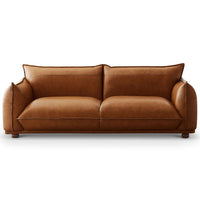
A few silhouettes naturally run shallower than the average, so they're worth seeking out: track-arm and shelter-arm styles, settees, tight-back designs, and lower mid-century profiles all tend to keep the frame trim. Within our range, two pieces genuinely earn the "narrow depth" label while still being comfortable to live with — one loveseat for the tightest footprints, one full sofa for when you need real three-seat width.
Moreland Loveseat — the narrowest footprint
At 29.9 inches deep, the Moreland is the most space-efficient piece we make — it barely projects past a console table. Crucially, it doesn't pay for that with comfort: the seat is a full, standard 22.4 inches, so two people sit properly rather than perching. For a studio, a home office, or any room where the walkway runs tight, this is the one. Its exposed metal legs and low, 31-inch profile keep it visually light, so even in a compact room it never reads as bulky.

Grantley Sofa — the narrow full three-seater
When a loveseat is too small but a standard sofa is too deep, the Grantley threads the needle. At 33.5 inches deep it's the shallowest full sofa in our range, yet it still seats three across a generous 95.9-inch width. A low 28.5-inch back keeps the visual weight down, so it fills the wall without filling the room — a real sofa for spaces a loveseat would leave under-seated.

Loveseat vs full sofa for narrow rooms: which to choose
Both keep a tight footprint; the deciding factor is how many people you seat and how much wall you have to fill.
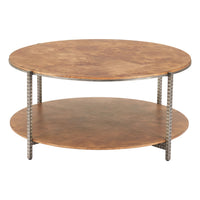
In the very tightest layouts, a narrow loveseat paired with a slim accent chair often beats squeezing in one larger sofa — it gives you flexible seating and keeps the floor open. Whichever you choose, placement does the rest of the work: push the piece flat against the longest wall, keep the path in front of it clear at 30 inches or more, and lean on a slim console or nesting tables instead of a deep coffee table. A narrow sofa against the wall with an open run in front of it will make a small room feel noticeably larger than a deeper piece floated even slightly into the space. Browse the full loveseat and sofa collections, or see how the pieces work together across our living room range.