



A daybed and a sofa can look surprisingly alike in a photo — both are long, upholstered, and built to lounge on — but they answer two different questions. One is really a bed that behaves like seating; the other is seating that, at most, occasionally behaves like a bed. Choosing the wrong one for your room is a common and frustrating mistake.
This guide lays out exactly what separates them: what each piece is built to do, how they compare on comfort, sleeping, and footprint, and a clear way to decide which fits your space. We'll finish with a sofa that borrows the daybed's relaxed, low-slung feel without giving up real seating.
Daybed vs sofa, the quick answer
A daybed is a piece of furniture built around a single (twin) mattress, designed to work as both a seat by day and a bed by night. A sofa is upholstered seating with a back and arms, built first and foremost for sitting and lounging, that only sleeps a guest if it's specifically a sofa bed.
So the decision usually comes down to one question: do you need the piece to sleep someone? If a room has to double as guest accommodation, a daybed is purpose-built for that. If you want the most comfortable seating for everyday living and lounging, a sofa wins on depth, softness, and capacity. Everything below is really just detail on those two priorities.
What a daybed is, and what it's for
A daybed is built around a twin-size mattress set into a frame, usually with a back and one or two ends — though some are backless, closer to the original idea of a bench you recline on. You make it up with a fitted sheet and cushions so it reads as seating during the day, then strip the cushions away to use it as a bed at night. Many versions add a trundle: a second mattress that pulls out from underneath, turning one piece into sleeping for two.
The form is ancient. The Greeks reclined on the kline to eat, talk, and sleep; the Romans built their dining rooms around couches that doubled as beds. The idea resurfaced through the centuries — the French récamier and Empire daybeds, the Victorian "fainting couch" — always circling the same notion of a seat you can stretch out fully on. The modern daybed is the practical descendant: less about reclining elegance, more about squeezing a guest bed into a room that has another daytime job.
That dual role is exactly what a daybed is for. It shines in a home office, a sunroom, a studio apartment, a child's or teen's room, or any spare room that can't be given over to a bed full-time. It turns square footage you already have into occasional sleeping space — without the awkward fold-out mechanics of a sofa bed.
Daybeds come in more styles than people expect, and the style decides how much the piece announces itself. Metal frames — often with scrollwork — read airy and traditional; wood frames feel warmer and more substantial; fully upholstered daybeds look the most like seating and blend most easily into a living space. You'll also choose a silhouette: a full back, a single raised end like a chaise, or a backless platform closest to the original idea. Underneath, a trundle adds a second pull-out mattress for two guests, while drawer bases trade the trundle for storage. Match the style to how visible and how hard-working the piece needs to be.
What a sofa is, and what it's for
A sofa is upholstered seating built for comfort and capacity: a back, arms, and seat cushions over a sprung or webbed frame, sized to seat anywhere from two to four people. Unlike a daybed, it's engineered around sitting — the seat is deeper, the cushions are softer, and the back is shaped to lean into rather than to prop a pillow against. It's the piece a living room is usually built around.
Because it isn't trying to be a bed, a sofa can commit fully to lounging comfort. Seat depth, cushion fill, and back angle are all tuned for sinking in and staying a while, which is why an evening of television or conversation is far more pleasant on a sofa than on a daybed's firmer mattress. That difference compounds over a long evening: the gentle recline of a sofa back supports your spine in a way a vertical mattress edge and a stack of pillows never quite manage, which is why people who buy a daybed for a living room often end up wanting a sofa anyway. If you want a primer on the wider family of seating terms — couch, settee, davenport, and the rest — our guide to davenport vs sofa vs couch sorts them out.
The trade-off is sleeping. A standard sofa doesn't make a real bed; at most, one person can nap on it. If overnight guests are a regular event, you either add a sofa bed or look to a daybed instead. For everything else — daily comfort, seating several people, anchoring a room — the sofa is the stronger piece.
"Sofa" also covers a wide range of its own, which matters here. It runs from a two-seat loveseat up to a multi-seat sectional, and if part of the daybed's appeal is stretching out full-length, a chaise sectional or a deep-seated sofa delivers that far more comfortably than a firm mattress ever will. In other words, the "I want to lie down on it" instinct that draws people to daybeds is often better answered by the right kind of sofa than by a mattress on a frame.
Daybed vs sofa: the key differences
Laid side by side, the two pieces separate cleanly on a handful of points. The table below is the fastest way to see where each one pulls ahead.
A daybed is a guest room disguised as furniture; a sofa is the seat your living room is built around.
Which fits your space, a daybed or a sofa
The right answer depends less on taste than on what the room has to do. Run through these and the choice usually makes itself.
Daybed or sofa, room by room
The same two pieces land differently depending on the room. Here's where each one tends to make the most sense.
In a studio apartment, a daybed can be the single piece that handles both sitting and sleeping — though if you already have a bed, a low, laid-back sofa keeps the lounge area genuinely comfortable. A home office is the daybed's classic home: it turns the room into an occasional guest room without surrendering the space to a permanent bed. A dedicated spare room often does best with a trundle daybed, which maximizes a small footprint and sleeps two when needed.
Kids' and teens' rooms have favoured daybeds for generations — a bed by night, a hangout seat by day, and a sleepover bed when a friend stays. In a sunroom or reading nook, either works: a daybed invites an afternoon nap, a low sofa invites a long lounge. But in the main living room, a sofa wins almost every time — reach for a daybed there only when the living room genuinely has to double as guest sleeping, which is mostly a small-home situation. If the room is tight, the measuring approach in our shallow-depth sofa guide helps either way.
A sofa that lounges like a daybed
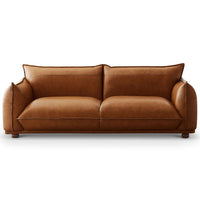
If the appeal of a daybed is really its low, relaxed, stretch-out feel rather than the sleeping, a laid-back sofa often scratches that itch better. The Grantley is a good example: a full three-seater with a low 28.5-inch back and a shallow 33.5-inch depth, so it reads casual and airy — closer to a lounge than a formal sofa — while still seating three and offering a sofa's softer comfort.

It's worth choosing the upholstery with the room's daily use in mind — a low, loungey sofa invites sprawling, so a hard-wearing, pleasant fabric matters; our bouclé vs velvet guide weighs the options. And if floor space is tight, the same measuring logic in our ideal sofa depth guide applies whether you land on a daybed or a sofa. Browse the full sofa collection or living-room range to compare options side by side.
Daybed vs sofa questions, answered
01 Is a daybed comfortable to sit on every day?
It's usable, but it sits more upright and firmer than a sofa, because you're sitting on a mattress with little back support. For daily lounging, bank firm cushions or a wedge against the wall — or choose a sofa, which is built for it.
02 Is a daybed the same as a sofa bed?
No. A daybed uses a permanent, always-made mattress and is a bed shaped like seating. A sofa bed is a sofa with a fold-out mattress hidden inside. The daybed is generally the more comfortable bed; the sofa bed is the more comfortable seat.
03 Can two people sleep on a daybed?
A standard daybed holds one adult on its twin mattress. Many daybeds add a trundle — a second mattress that pulls out from underneath — which lets the piece sleep two when needed and tuck away to one footprint the rest of the time.
04 Which takes up less space?
A daybed's footprint is roughly a twin bed, which is often deeper but shorter than a full sofa. The real difference is value per square foot: a daybed gives you a bed and a seat in one footprint, while a sofa gives you better seating but no bed.
05 Can a daybed work in a living room?
It can, especially in a studio or a small open-plan home where the living room doubles as a guest space. Just know you're trading some everyday sitting comfort for the sleeping function. If the room is mainly for lounging, a sofa — or a low, laid-back one — is the more comfortable everyday choice.
06 Are daybeds good for small apartments?
They can be ideal. In a studio or a tight one-bedroom, a daybed earns its footprint by being both a seat and a bed — especially with a trundle for guests. The trade-off is everyday sitting comfort, so add firm back cushions if you plan to lounge on it daily, or choose a compact sofa if sleeping isn't a priority.