



Pet-Friendly Leather Couch Guide: How Dog Owners Choose the Right Sofa
If you share your home with a dog, finding a pet-friendly leather couch is about more than just picking something that looks good. It is about finding a sofa that can handle claws, fur, drool, the occasional muddy paw print, and years of daily use without falling apart or looking like it has been through a battle. The good news is that leather is already one of the most pet-friendly upholstery materials available. The key is knowing which type of leather, which finish, and which construction details make the difference between a sofa that thrives alongside your dog and one that shows every encounter.
This guide walks dog owners through everything you need to know about choosing a pet-friendly leather sofa: which leather types hold up best against scratches and wear, which finishes offer the most protection, what construction features to prioritize, and how to maintain your leather sofa so it looks great for years even with a dog on it every day. Whether you have a calm lapdog or an energetic breed who takes running leaps onto the furniture, the right leather sofa can handle it all.
Why Leather Is the Best Material for Dog Owners
Before diving into the specifics of which leather to choose, it is worth understanding why leather outperforms fabric for pet owners in the first place. The advantages are not marginal. They are significant across every dimension that matters when dogs are part of the household.
Dog hair does not embed in leather the way it does in fabric. A quick wipe with a cloth or a pass with a lint roller removes fur completely from leather surfaces. With fabric, hair works its way into the weave and becomes nearly impossible to fully remove, even with a powerful vacuum. Over months and years, this accumulation creates a permanent layer of pet hair that affects both the appearance and the hygiene of the sofa.
Drool, muddy paws, and accidental messes wipe clean from leather with minimal effort. Fabric absorbs these liquids immediately, often leaving stains that set before you can address them. Leather's non-porous surface gives you a window of time to clean up, and most everyday messes leave no trace at all. This is especially valuable for owners of larger breeds, heavy droolers, or dogs who have not yet mastered the art of wiping their paws at the door.
Leather also resists odors far better than fabric. Dogs have a distinct smell, and that smell transfers to whatever they lie on regularly. Fabric absorbs and retains pet odors over time, requiring periodic deep cleaning or professional treatment. Leather does not absorb odors the same way, keeping your living room smelling fresher even with a dog who considers the sofa their personal bed.
For allergy sufferers who also have dogs, leather offers another practical benefit. Fabric upholstery traps allergens including pet dander, pollen, and dust mites deep within the fibers where vacuuming cannot fully reach them. Leather's smooth, non-porous surface does not harbor these particles. A simple wipe-down removes allergens from leather completely, making it a far healthier choice for households managing both pet ownership and allergy sensitivity. This combination of easy cleaning, odor resistance, and allergen control is why veterinarians and interior designers alike frequently recommend leather as the top upholstery choice for pet households.
Leather resists pet hair, odors, stains, and moisture far better than fabric, making it the most practical upholstery choice for dog owners. The right leather type and finish add scratch resistance to these natural advantages.
Which Leather Types Are Most Pet-Friendly?
Not all leather is equally suited to life with dogs. The type and grade of leather determines how well it handles scratches, how easily it cleans, and how it ages under pet-related wear. Here is how the major leather types rank for dog owners.
| Leather Type | Scratch Resistance | Ease of Cleaning | Pet-Friendliness |
|---|---|---|---|
| Pigmented Top Grain | Excellent | Excellent | Best choice for most dog owners |
| Semi-Aniline | Very Good | Very Good | Great balance of beauty and protection |
| Full Grain (Protected) | Good | Good | Premium option; scratches blend with patina |
| Aniline | Low | Moderate | Beautiful but vulnerable; not ideal for active dogs |
| Bonded Leather | Poor | Moderate | Avoid; peels and deteriorates quickly |
| Faux Leather | Moderate | Good | Budget option; shorter lifespan, prone to peeling |
For dog owners, pigmented top grain leather is the gold standard. The pigmented finish creates a protective coating over the leather surface that resists scratches, stains, and moisture significantly better than unfinished or lightly finished leather. It is also the easiest type to clean because the coating prevents liquids and dirt from penetrating the hide. For a deeper understanding of how different finishes affect protection, our aniline vs semi-aniline vs pigmented leather guide covers the full spectrum.
Semi-aniline leather is an excellent alternative for owners who want a more natural look with good protection. The thin topcoat provides meaningful scratch and stain resistance while preserving the natural grain and color depth of the hide. Our semi-aniline leather guide explains why it is often the best compromise between beauty and durability.

Understanding Scratches: What Really Happens When Dogs Meet Leather
Scratches are the number one concern dog owners have about leather furniture, and it is a legitimate one. But the reality is more encouraging than most people expect, because the way leather handles scratches is fundamentally different from how fabric handles claw damage.
When a dog's claws scratch fabric upholstery, they snag and tear individual fibers. Once those fibers are broken, the damage is permanent and progressive. A small tear becomes a bigger tear. A pulled thread creates a run. The fabric weakens in the affected area, and the only real fix is reupholstering.
Leather handles scratches very differently. Light surface scratches on quality leather can often be buffed out by rubbing the area gently with your finger. The natural oils in your skin, combined with the warmth of friction, help the surface heal. Deeper scratches leave marks, but on quality leather they blend into the patina over time rather than looking like damage. This is especially true for pigmented and semi-aniline leather, where the protective coating absorbs most light scratches before they reach the hide itself.
The type of dog you have also affects the scratch equation. Small dogs with fine nails cause far less surface impact than large breeds with thick, heavy claws. Breeds that are natural jumpers, like Labradors and Spaniels, create more stress on the sofa surface during launch and landing than dogs who climb up calmly. Understanding your dog's specific behavior patterns helps you choose the right level of leather protection. A calm older dog who lounges all day requires far less scratch resistance than a young, high-energy breed who treats the sofa like a launching pad.
- Light scratches buff out with finger pressure and warmth
- Deeper marks blend into patina over time
- Pigmented finish absorbs most surface-level claw contact
- Does not snag, tear, or create progressive damage
- Can be treated with leather conditioner to improve appearance
- Scratches add character rather than looking like deterioration
- Claws snag and tear individual fibers permanently
- Small tears become larger tears with continued use
- Pulled threads create visible runs in the weave
- Damaged areas weaken structurally over time
- Repair options are limited and often visible
- Scratches always look like damage, never like character
Scratch prevention basics: The single most effective thing you can do to prevent leather scratches is to keep your dog's nails trimmed. Short, smooth nails dramatically reduce the risk of surface damage. If your dog is a jumper, a quick nail trim every two to three weeks makes a bigger difference than any leather protector or cover.
What to Look for When Shopping for a Pet-Friendly Leather Couch
Beyond the leather type and finish, several construction and design features make a significant difference in how well a sofa holds up to life with dogs. Here is what to prioritize when evaluating your options.
Choose Pigmented or Semi-Aniline Finish
As covered above, these finishes provide the protective coating that resists scratches and stains. Avoid pure aniline leather if you have active dogs, as it has no protective topcoat and will show every scratch and spill immediately. Our protected vs unprotected leather guide explains the difference in detail.
Select a Mid-Tone Color
Very light leather shows dirt and claw marks more readily, while very dark leather shows pet hair and dust. Mid-tones in the cognac, tan, and warm brown range hide both scratches and fur while developing an attractive patina. Our best leather sofa colors guide covers which shades work best for pet households.
Look for Removable and Reversible Cushions
Removable cushions make cleaning easier and allow you to rotate them regularly to distribute wear. Reversible cushions double the functional lifespan of the cushion cover. If your dog has a favorite spot, being able to flip the cushion periodically keeps wear from concentrating in one area.
Prioritize Solid Frame Construction
Dogs add impact stress that human use alone does not. Jumping on and off the sofa, sudden weight shifts, and enthusiastic landings all test the frame. Hardwood frames, particularly kiln-dried hardwood, handle this stress far better than particleboard, MDF, or softwood alternatives. Metal reinforcement at stress points is a valuable bonus.
Consider a Distressed or Pull-Up Leather
Distressed leather finishes and pull-up leathers have an already-worn aesthetic that absorbs scratches into the existing look rather than contrasting with it. What would be a visible mark on pristine pigmented leather disappears into the character of a distressed finish. This is a great option for owners of particularly active or claw-heavy dogs.

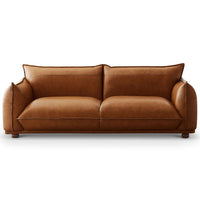
The Norton combines genuine leather durability with the kind of solid construction that handles daily life with dogs without missing a beat. Its quality leather surface cleans easily and develops the character-building patina that makes pet-caused marks blend naturally over time.
View the Norton SofaHow to Protect Your Leather Sofa from Dog Damage
Even with the right leather type and construction, a few proactive measures make a significant difference in how your sofa holds up over the years. These are the strategies that experienced dog-owning leather sofa owners swear by.
-
Trim Nails Every 2 to 3 Weeks Short, smooth nails are the single most effective protection against leather scratches. Use a nail grinder rather than clippers for the smoothest finish. If your dog resists nail care, a professional groomer can handle it quickly and affordably.
-
Condition the Leather Every 6 Months Leather conditioner replenishes the natural oils that keep the hide supple and resistant to scratching. Well-conditioned leather flexes with claw contact rather than marking. Dry, unconditioned leather is far more susceptible to visible scratches.
-
Use a Designated Blanket or Throw If your dog has a favorite spot on the sofa, draping a washable blanket over that area provides an extra layer of protection. Choose a blanket that your dog associates as their spot. Many dogs will settle on the blanket consistently once the habit is established.
-
Provide an Equally Comfortable Alternative A high-quality dog bed placed near the sofa gives your dog a comfortable alternative. Some dogs prefer the sofa because it is the most comfortable spot in the room. An equally plush dog bed can redirect at least some of the traffic away from your leather sofa.
-
Clean Up Drool and Paw Prints Promptly While leather resists moisture better than fabric, leaving drool or muddy paw prints sitting on the surface for extended periods can eventually affect the finish. A quick wipe with a dry or slightly damp cloth within a reasonable timeframe prevents any long-term impact.
Leather Types to Avoid When You Have Dogs
Just as some leather types excel in pet-friendly households, others are a poor fit. Knowing what to avoid saves you from a costly mistake.
-
Bonded Leather Bonded leather is made from ground-up leather scraps mixed with adhesive and coated onto a fabric backing. It peels, cracks, and deteriorates quickly under normal use, and pet wear accelerates its breakdown dramatically. Our genuine vs bonded vs faux leather guide explains why it should always be avoided.
-
Pure Aniline Leather Pure aniline leather is the most beautiful and natural-looking leather, but it has no protective topcoat. Every scratch, spill, and paw print shows immediately and permanently. It is a poor choice for any household with active dogs unless you are comfortable with aggressive aging.
-
Very Light Colored Leather White, cream, and very light tan leather shows every paw print, drool mark, and claw scratch with high visibility. Mid-tones are far more forgiving. If you love lighter leather, be prepared for significantly more maintenance to keep it looking clean.
-
Budget Faux Leather While faux leather cleans easily, it is structurally weaker than genuine leather and more susceptible to puncture from claws. It also peels and cracks within three to five years. If budget is a constraint, a mid-range genuine leather sofa is a better long-term investment than a budget faux alternative. Our leather match vs faux leather comparison covers this trade-off.

Maintenance Routine for Dog Owners with Leather Sofas
Maintaining a leather sofa in a dog-friendly household does not require intensive effort. It just requires consistency. Here is the simple routine that keeps your pet-friendly leather couch looking its best year after year.
Weekly: Wipe the entire sofa with a soft, dry cloth to remove fur, dust, and surface dirt. Pay extra attention to seams and crevices where fur accumulates. Use a vacuum with a soft brush attachment on cushion gaps and between seat cushions every two weeks.
Monthly: Clean the sofa with a damp cloth and a leather-specific cleaner. Focus on areas your dog frequents most, including seat cushions, armrests, and the area where your dog jumps on and off. Allow the leather to dry completely before sitting on it.
Every 6 months: Apply a quality leather conditioner to the entire sofa. This keeps the leather supple, resistant to scratching, and protected against drying and cracking. Conditioning is particularly important in dry climates or homes with forced-air heating, which pull moisture from the leather. Think of conditioning as preventative care: it is far easier and less expensive to maintain leather than to repair it after it has dried out and become vulnerable.
As needed: Address deeper scratches or scuff marks with a leather repair balm or color-matched touch-up product. Most pet-related scratches are surface-level and respond well to gentle buffing and conditioning, but occasionally a deeper mark benefits from a targeted repair. Keep a leather care kit on hand so you can address marks promptly rather than letting them accumulate.
Products to avoid: Never use baby wipes, all-purpose household cleaners, vinegar, or alcohol-based products on leather. These strip the protective finish and dry out the hide, creating the very vulnerability to scratches and damage that you are trying to prevent. Always use products formulated specifically for leather furniture care.
For more detailed care instructions tailored to different leather finishes, our how to protect leather sofas from dogs guide goes into greater depth on each step. And to understand the full lifespan you can expect from properly maintained leather, see our guide on how long a leather sofa lasts.

The Fairhaven offers the spacious seating that families with dogs need, wrapped in genuine leather built to handle everyday pet life. Its warm neutral tone hides minor marks beautifully, and the generous configuration gives everyone, including your dog, room to spread out.
View the Fairhaven SectionalConclusion
A pet-friendly leather couch is not a compromise. It is the smartest upholstery choice a dog owner can make. Leather resists pet hair, odors, stains, and moisture naturally, and with the right type and finish, it handles scratches better than any fabric alternative. Pigmented or semi-aniline top grain leather in a mid-tone color gives you the best combination of scratch resistance, easy maintenance, and long-term beauty.
The key to success is choosing quality leather, maintaining it with regular conditioning, and keeping your dog's nails trimmed. Do those three things, and your leather sofa will not only survive life with a dog, it will look better for it. The patina that develops from real use, including the occasional claw mark, gives leather furniture the kind of lived-in warmth that makes a house feel like a home for everyone in the family, four-legged members included.
Avoid the common mistakes that lead to frustration: do not buy bonded leather thinking it will perform like genuine leather, do not choose pure aniline if you have active dogs, and do not skip the conditioning routine that keeps leather resilient against scratches. With the right leather and basic care, your sofa and your dog can coexist beautifully for fifteen years or more. For the full picture on what to expect over the life of your sofa, our guide on whether top grain leather peels addresses the most common long-term concern.
Explore our leather sofa collection for pet-friendly options built to last, browse our sectionals for spacious family configurations, or check our sofa collection for every style. See our loveseats for compact leather options, explore our living room furniture, or shop our bestsellers. For more on leather quality, read our complete leather sofa buying guide and our Italian leather guide.
Find Leather That Lives Well with Dogs
Our genuine leather collection is built for real life, including life with pets. Discover sofas and sectionals that handle everyday wear and look better for it.
Shop Leather Sofas Shop Sectionals