



Finding the Most Versatile Leather Sofa Color: A Guide for Every Style
Choosing a leather sofa is a significant decision, and the color you pick will shape the look and feel of your living room for years to come. Unlike fabric sofas that might get replaced in five to seven years, a quality leather sofa is built to last decades. That means the color you commit to today needs to work not just with your current decor, but with whatever changes you make to your space over time.
This is exactly why finding the most versatile leather sofa color matters so much. The right neutral sets a foundation that adapts to new wall colors, different accent pillows, seasonal decor shifts, and evolving personal taste without ever looking out of place. The wrong choice locks you into a narrow aesthetic that limits your options every time you want to refresh the room.
In this guide, we break down the best neutral leather sofa colors from warm cognacs to cool greys, compare how each one performs across different design styles, and help you identify which shade will give you the most flexibility for your specific space. Whether you are furnishing a brand-new home or replacing an aging sofa in a well-established room, this is everything you need to choose a color you will not regret.
What Makes a Leather Sofa Color Versatile
Before diving into specific shades, it helps to understand what versatility actually means when it comes to leather furniture. A versatile leather sofa color is one that checks several important boxes at once. It pairs naturally with a wide range of wall colors and flooring materials. It works across multiple design styles, from mid-century modern to farmhouse to contemporary. It hides wear and aging gracefully rather than showing every scuff and fade. And it does not clash with seasonal changes in throw pillows, blankets, and accent decor.
The most versatile colors tend to sit in the warm neutral range: think tones that contain both warm and cool undertones, or that lean warm without being overly saturated. Very bold or very light colors narrow your options. A bright cherry red leather sofa demands that the entire room revolve around it. A stark white leather sofa shows every mark and limits you to a very specific aesthetic. The sweet spot is somewhere in between: colors with enough character to feel intentional but enough neutrality to adapt.
The most versatile leather sofa color is one that works across multiple design styles, pairs with a wide range of wall and floor colors, hides everyday wear naturally, and adapts to decor changes without clashing.
The Top Leather Sofa Colors Ranked by Versatility
Here is how the most popular leather sofa colors stack up when it comes to real-world flexibility. This ranking considers how each color performs across different room settings, design aesthetics, lighting conditions, and long-term aging. For a broader exploration of leather sofa shades including bolder options, our best leather sofa colors guide covers the full spectrum.
| Color | Versatility | Best Design Styles | Patina Quality |
|---|---|---|---|
| Cognac / Caramel | Excellent | Mid-century, traditional, bohemian, transitional, Scandinavian | Beautiful warm deepening |
| Tan / Camel | Very Good | Farmhouse, coastal, bohemian, casual contemporary | Softens to a warm, lived-in tone |
| Chocolate Brown | Very Good | Traditional, rustic, industrial, masculine spaces | Deepens subtly with age |
| Grey | Good | Modern, contemporary, minimalist, industrial | Minimal visible change |
| Black | Good | Modern, industrial, urban, loft spaces | Develops a soft, worn sheen |
| Cream / Ivory | Moderate | Coastal, Scandinavian, contemporary, minimalist | Can yellow with oils and UV |
Cognac: The Most Versatile Leather Sofa Color
If you forced every interior designer to agree on a single most versatile leather sofa color, the majority would land on cognac. This warm, amber-toned brown sits in a unique position on the color spectrum: it is dark enough to hide everyday wear, warm enough to make a room feel inviting, and neutral enough to pair with virtually any wall color and accent palette. It reads as intentional and sophisticated without being flashy, which is exactly why it has remained the most popular leather sofa color for decades.
Cognac leather works equally well against white walls, navy walls, sage green, warm grey, and even bold jewel tones. It pairs naturally with wood furniture in nearly every finish, from light oak to dark walnut. It complements both cool-toned metals like brushed nickel and warm metals like brass. This chameleon-like quality is what makes cognac the safest bet for anyone who changes their decor seasonally or plans to redecorate at some point.
Perhaps most importantly, cognac leather develops one of the most beautiful patinas of any leather color. Over time, the surface takes on a deeper, richer warmth that makes the sofa look increasingly premium. Areas of regular contact darken slightly while less-used areas retain their original tone, creating a depth and character that only real leather can achieve. To learn more about how leather ages over time, our guide on how long a leather sofa lasts covers what to expect at every stage.

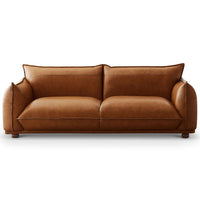
The York delivers the warmth and versatility of cognac leather in a clean, contemporary silhouette. Its rich amber tone pairs effortlessly with any design style, while the quality leather develops the kind of beautiful patina that makes a sofa look better with every passing year.
View the York SofaTan and Camel: The Relaxed Neutral
Where cognac leans rich and amber, tan and camel leather tones are lighter, sandier, and more relaxed in feel. This lighter shade of brown is the best neutral leather sofa color for spaces that aim for a casual, airy, or coastal aesthetic. It brings warmth without heaviness, making it an excellent choice for smaller rooms or spaces with limited natural light where a darker leather might feel oppressive.
Tan leather pairs beautifully with white, cream, light grey, and soft blue walls. It works particularly well in rooms with natural wood flooring and woven textures like jute, rattan, and linen. If your design style leans toward farmhouse, coastal, bohemian, or relaxed contemporary, a tan leather sofa is likely the most versatile option for your aesthetic. The laid-back vibe it brings to a room is difficult to replicate with darker shades.
The one trade-off with lighter leather tones is that they show stains and wear more readily than darker options. Spills, body oils, and denim transfer are more visible on tan leather, so regular conditioning and prompt spill cleanup become especially important. That said, well-maintained tan leather ages into a gorgeous, honey-toned patina that many people consider the ideal look for lived-in leather furniture.

Denim transfer tip: If your household wears a lot of jeans, be aware that dark denim can transfer indigo dye onto lighter leather. This is more visible on tan and camel tones. Regular cleaning with a leather-specific product removes most denim transfer before it sets permanently. Our protected vs unprotected leather guide explains how different finishes handle this.
Chocolate Brown: The Timeless Classic
Chocolate brown leather is the color most people picture when they think of a classic leather sofa. It is rich, warm, and commanding without being as bold as black or as trendy as cognac. This depth of brown has been a staple in traditional, rustic, and masculine-leaning interiors for generations, and it remains one of the most reliable choices for anyone who wants their sofa to feel grounded and substantial.
The versatility of chocolate brown comes from its ability to anchor a room. While lighter colors like tan and cognac blend into their surroundings, dark brown leather makes a deliberate statement. It works best in medium to large rooms where it can hold its own without making the space feel smaller. Against lighter walls, it creates a striking contrast. Against wood paneling or warmer wall tones, it blends seamlessly into a cohesive, enveloping atmosphere.
From a practical standpoint, dark brown leather hides wear, stains, and aging better than any other color on this list. Scratches, body oils, and minor discoloration blend naturally into the already-rich surface. If you have children, pets, or simply prefer a low-maintenance sofa that looks good without constant attention, chocolate brown leather is among the most forgiving options available.
Grey Leather: The Modern Neutral
Grey leather is a relatively recent addition to the leather sofa color palette, but it has quickly established itself as the go-to choice for modern, contemporary, and minimalist interiors. Where brown tones bring warmth, grey brings a cool, sophisticated neutrality that aligns perfectly with the clean lines and muted palettes that define contemporary design.
The versatility of grey leather depends heavily on the specific shade. A warm greige, which blends grey with beige undertones, is the most flexible option and works across a broader range of styles. A cool, blue-toned grey is striking in modern spaces but can feel out of place in warmer, more traditional rooms. If you are choosing grey, pay close attention to the undertone and test it against your existing wall colors and flooring before committing.
Grey leather does have a few limitations worth considering. It does not develop patina the way brown leather does, so the aging process is less visually dramatic. It can also feel cold in rooms that lack warm accents, so balancing a grey leather sofa with warm wood tones, soft textiles, and warm-toned lighting is important to keep the space feeling inviting rather than sterile.

Black Leather: Bold but Polarizing
Black leather is the most visually assertive option on this list. It makes a strong statement, reads as sleek and modern, and has an undeniable urban edge that works powerfully in loft apartments, industrial spaces, and contemporary rooms with high contrast design. A black leather sofa in the right setting looks effortlessly cool.
However, black is also the most polarizing choice and arguably the least versatile of the major neutral leather colors. It dominates a room visually, which means the rest of the space needs to be designed around it rather than the sofa adapting to the space. Black leather shows dust, pet hair, and scratches more visibly than brown tones. And while it can age beautifully, developing a soft, worn patina in areas of frequent use, the overall effect is less warm than what you get from brown or cognac.
If your design style leans industrial, modern, or urban, and you are confident in that direction, a black leather sofa can be a striking anchor piece. But if you want flexibility to change your decor over time, warmer tones will serve you better. For help deciding between leather options in general, our complete leather sofa buying guide walks through every consideration.
Cream and Ivory Leather: Light but Limited
Cream and ivory leather sofas are undeniably beautiful. They bring an airy, luxurious quality to a room that darker colors cannot match, and they photograph exceptionally well, which is partly why they appear so frequently in design magazines and on social media. In the right setting, a cream leather sofa can be the most elegant piece in the house.
The challenge is practicality. Light leather shows every spill, every smudge, and every trace of body oil. Denim transfer is highly visible. Direct sunlight can cause yellowing over time. And the maintenance required to keep cream leather looking pristine is substantially more demanding than what darker shades need. This does not mean you should avoid cream leather entirely, but it does mean you should go in with realistic expectations about the level of care involved.
Cream leather works best in adult-only households, low-traffic formal living rooms, or spaces where the sofa will not be the primary everyday seating. If you love the look but live with kids, pets, or heavy daily use, consider a leather in the tan-to-cognac range instead. You will get a similar warmth and lightness with dramatically better stain concealment. Our genuine vs bonded vs faux leather guide explains how material quality affects stain resistance across all colors.
- Cognac or caramel for the widest style compatibility
- Tan or camel for casual, airy spaces
- Warm greige for modern-leaning rooms
- Chocolate brown for traditional, family-friendly durability
- Black limits you to modern and industrial aesthetics
- Cream requires intensive maintenance and careful use
- Cool-toned grey clashes with warm traditional decor
- Any bold color (red, navy, green) narrows your design options
How to Choose the Best Neutral Leather Sofa Color for Your Room
Knowing which colors are most versatile in general is helpful, but the best neutral leather sofa color for your specific space depends on several factors unique to your home. Here is a practical framework for narrowing down your choice.
Assess Your Room's Natural Light
Rooms with abundant natural light can handle darker leather colors without feeling heavy. North-facing rooms or spaces with limited windows benefit from lighter tones like tan or cognac that reflect warmth. If your room gets strong afternoon sun, avoid cream leather, as UV exposure causes yellowing, and be aware that very dark leather absorbs heat and can feel warm to the touch.
Consider Your Wall Colors and Flooring
Hold your potential leather color against your existing fixed elements. Cognac and tan leather pair beautifully with both warm and cool wall tones. Grey leather works best with cool or neutral walls and can clash with warm beige or yellow tones. Dark brown leather needs lighter walls to avoid creating a cave-like effect. If you plan to repaint in the future, lean toward cognac or tan for maximum compatibility.
Think About Your Lifestyle
Be honest about how the sofa will be used. Families with young children and pets should lean toward darker, more forgiving tones. Adults-only households have more latitude for lighter shades. If you tend to eat or drink on the sofa, mid-range browns are the most practical. If the sofa will live in a formal, seldom-used room, you have more freedom to choose aesthetics over durability.
Evaluate Your Existing Furniture
Look at the other major pieces in the room, including coffee tables, entertainment consoles, shelving, and accent chairs. Leather in the brown family (cognac, tan, chocolate) pairs naturally with wood furniture. Grey and black leather work better alongside metal, glass, and lacquered surfaces. A leather color that complements your existing pieces will feel cohesive, while a clashing tone creates visual tension.
Plan for the Long Term
Your leather sofa will likely outlast several rounds of decor changes. Choose a color that gives you room to evolve. Cognac and tan are the safest long-term choices because they complement the widest range of accent colors and decor styles. If you know your taste tends to shift frequently, avoid colors that commit you to a specific palette or aesthetic.
The leather finish matters too: The way leather is dyed and finished affects how the color reads in your space. Aniline and semi-aniline finishes produce richer, more natural-looking color with visible grain, while pigmented finishes create a more uniform, opaque tone. For details on how different finishes change the look of your sofa, see our aniline vs semi-aniline vs pigmented comparison.

The Fairhaven Sectional is available in a warm, versatile leather tone that bridges the gap between tan and cognac, making it one of the most adaptable pieces in any living room. Its generous proportions and quality genuine leather construction ensure it looks and feels premium for years.
View the Fairhaven SectionalMaintaining Your Leather Sofa's Color Over Time
No matter which color you choose, the way you care for your leather sofa directly affects how the color ages. Proper maintenance preserves the richness and depth of the original shade while allowing the natural patina process to enhance rather than detract from the appearance.
-
Condition Every 6 to 12 Months Regular conditioning replenishes the oils that keep leather supple and prevent the color from drying out and fading. Use a quality leather conditioner and apply in thin, even coats with a soft cloth.
-
Keep Out of Direct Sunlight UV rays are the biggest enemy of leather color. Prolonged sun exposure fades all leather, with lighter colors and aniline finishes being the most vulnerable. Use curtains or blinds to filter strong light.
-
Clean Spills Immediately Prompt blotting prevents stains from setting into the leather. This is especially important for lighter colors like tan and cream. Always blot rather than rub, and use leather-specific cleaning products.
-
Avoid Harsh Chemical Cleaners Alcohol, bleach, and all-purpose household sprays strip the protective finish and can permanently discolor the leather. Only use products formulated specifically for leather care.
-
Embrace the Patina The natural darkening and softening of leather over time is not damage. It is one of the most valued qualities of real leather furniture. Rather than fighting it, enjoy the way your sofa develops its unique character with use.
For pet-specific care advice, especially regarding scratches on lighter leather, our guide on choosing a leather sofa when you have pets offers practical strategies for every color. And to understand whether peeling is ever a concern, see our guide on whether top grain leather peels.
Conclusion
When it comes to finding the most versatile leather sofa color, cognac and its warm amber-brown relatives sit at the top of the list for good reason. They work with the widest range of design styles, wall colors, and accent palettes while developing the most beautiful patina over time. Tan and camel are close runners-up for casual, lighter spaces, while chocolate brown remains the dependable classic for traditional homes. Grey and black serve more specific aesthetics well but sacrifice some of the cross-style flexibility that warmer tones provide.
The best neutral leather sofa color for your home ultimately depends on your specific light conditions, existing decor, lifestyle demands, and long-term plans. Use the framework in this guide to evaluate each option against your real-world circumstances, and trust that any color in the warm neutral range will give you decades of style-flexible service.
Explore our leather sofa collection to see these colors in person, browse our sectionals for spacious leather configurations, or check out our full sofa collection for every style and material. See what is trending in our bestsellers, or explore our loveseats and living room furniture for complementary pieces. For more on leather quality and selection, read our Italian leather guide and our guide to buying leather sofas online.
Find Your Perfect Leather Color
From warm cognac to cool grey, our leather collection offers versatile tones that complement any design style. Discover the color that fits your home.
Shop Leather Sofas Shop Sectionals