



Do Leather Sofas Last Longer Than Fabric? The Honest Comparison
It is one of the most common questions people ask when shopping for a new sofa: do leather sofas last longer than fabric? The short answer is yes, generally they do. But the full answer is more nuanced than a simple yes or no, because the durability gap between leather and fabric depends heavily on the quality of each material, how the sofa is constructed, how it is used, and how well it is maintained over time. A blanket statement does not do justice to the real-world complexity of how these materials perform across different lifestyles and budgets.
A cheap leather sofa can fall apart faster than a well-made fabric one. A high-performance fabric can rival mid-grade leather in longevity. And the way each material ages, not just how long it lasts, tells a fundamentally different story about long-term value. Leather develops character. Fabric, in most cases, just shows wear.
This guide gives you the real, data-backed comparison between leather and fabric sofa durability. We cover expected lifespans for each material at different quality levels, how they handle everyday wear and aging, the maintenance each requires, and the long-term cost equation that might change how you think about the initial price difference. If you are trying to decide between a leather sofa and a fabric one, this is the honest assessment you need before spending.
The Lifespan Numbers: Leather vs Fabric at Every Quality Level
The durability difference between leather and fabric is not a single number. It is a range that shifts dramatically based on the quality tier of each material. Here is what you can realistically expect from each at different price points.
| Quality Level | Leather Sofa Lifespan | Fabric Sofa Lifespan |
|---|---|---|
| Budget | 3-5 years (bonded or faux leather) | 3-5 years (low-density polyester) |
| Mid-Range | 10-15 years (split grain or corrected grain) | 7-10 years (cotton blend, linen, standard chenille) |
| High Quality | 15-25 years (top grain or full grain) | 10-15 years (performance fabric, high-rub chenille) |
| Premium | 25+ years (full grain aniline or Italian leather) | 12-18 years (Crypton, Sunbrella, premium performance) |
The pattern is clear at every quality tier: leather consistently outlasts fabric by a meaningful margin. But notice that budget leather, which includes bonded leather and low-quality faux leather, performs no better than budget fabric. The durability advantage of leather only materializes when you are buying genuine leather of at least corrected grain quality or higher. For a detailed breakdown of leather quality tiers, our genuine vs bonded vs faux leather guide explains what each grade means in practice.
Quality leather sofas last 15 to 25 years on average, roughly two to three times longer than comparable fabric sofas at 7 to 15 years. But budget leather performs no better than budget fabric, so quality matters as much as material type.
Why Leather Lasts Longer: The Material Science
The durability advantage of leather is not just a matter of perception. It is rooted in fundamental differences in how the two materials are structured and how they respond to stress over time.
Leather's Natural Resilience
Genuine leather is animal hide that has been tanned and treated to preserve its natural fiber structure. This structure is made up of densely interlocking collagen fibers that give leather exceptional tensile strength and resistance to tearing. The fibers flex and move with use rather than breaking down, which is why leather actually becomes softer and more supple over time rather than weaker. This natural flexibility is something no synthetic or woven material can fully replicate.
Leather also resists abrasion better than most fabrics. The surface of quality leather can withstand tens of thousands of rub cycles before showing significant wear, while many common upholstery fabrics begin to thin and pill after just a few thousand. This matters enormously for a sofa, which endures constant friction from sitting, shifting, and standing. The dense fiber structure of leather distributes stress across a wider area, preventing the localized breakdown that causes fabric to thin and wear through in high-contact zones like armrests and seat edges.
How Fabric Wears Down
Fabric upholstery is made from woven or knitted fibers, and those fibers are inherently more vulnerable to several types of degradation. Friction causes pilling, where loose fibers ball up on the surface, making the fabric look worn and tired. UV light breaks down fiber bonds, causing fading and weakening. Moisture and body oils are absorbed into the fibers, creating odors and attracting dust mites. And once the weave begins to loosen or thin from repeated compression, the fabric loses its structural integrity in ways that cannot be reversed.
Even high-performance fabrics with impressive rub-count ratings eventually succumb to these forces. They last longer than standard fabrics, sometimes significantly so, but they still degrade in ways that leather simply does not.

How Each Material Ages: Patina vs Deterioration
The way a sofa ages is just as important as how long it lasts, because aging determines whether the sofa still looks good at year eight or ten, or whether it looks like it needs replacing even though it is structurally sound.
Leather Aging: Character That Adds Value
Quality leather develops patina, a gradual deepening and mellowing of color and texture that occurs through regular use. The surface becomes richer and more complex. Areas of frequent contact darken slightly, creating depth and warmth. Minor scratches blend naturally into the grain. The leather softens and conforms to the way you sit, making the sofa more comfortable over time.
Patina is so highly valued that vintage leather furniture often commands higher prices than new pieces. A well-maintained leather sofa at fifteen years old can look more beautiful than it did new, which is an extraordinary quality that no fabric can match. This is one of the most underappreciated aspects of leather's durability story: it is not just that leather lasts longer, it is that it looks better for longer and actually improves in aesthetic quality through the very process of being used. Our guide on how long a leather sofa lasts covers the full aging timeline and what to expect at each stage.
Fabric Aging: Gradual Decline
Fabric sofas age in the opposite direction. Colors fade from UV exposure and repeated cleaning. Cushion covers stretch and wrinkle, losing their original crispness. Pilling creates a fuzzy, worn surface that is difficult to fully restore. Stains that were not caught immediately become permanent residents in the fibers. And because fabric absorbs rather than repels, it accumulates allergens, dust, odors, and body oils over time in ways that affect both appearance and hygiene.
The specific fabric type makes a real difference in how quickly this decline happens. Tightly woven synthetics like polyester resist pilling better than natural fibers like cotton and linen, but they can feel less comfortable and tend to trap heat. Blended fabrics try to balance durability with comfort, but they still face the fundamental limitation that all woven materials share: the individual fibers degrade with friction, moisture, and UV exposure in ways that leather's solid hide structure does not.
A well-maintained fabric sofa can still look decent at seven to ten years, but it rarely looks better than it did when it was new. At best, it maintains a respectable appearance. At worst, it begins to look tired, stained, and dated well before the frame and cushions actually wear out.
The Durability Test: Real-World Scenarios
Abstract lifespan numbers are useful, but what really matters is how each material handles the specific challenges that sofas face in everyday homes. Here is how leather and fabric compare across the most common real-world durability tests.
- Spills wipe away rather than absorbing into the material
- Does not trap allergens, dust mites, or pet dander
- Resists pilling, fraying, and fiber breakdown entirely
- Body oils and perspiration wipe clean; do not create odors
- Pet claws cause surface scratches that blend with patina
- Color deepens and improves with age rather than fading
- Does not scratch from pet claws or sharp objects
- Stays comfortable in extreme heat without feeling sticky
- Wider range of colors, patterns, and textures available
- Removable, washable covers on some styles (slipcovers)
- Lower initial cost at comparable quality levels
- Does not require conditioning or specialized care products

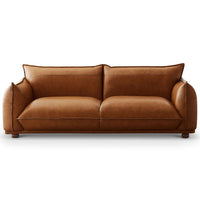
The Norton delivers the kind of long-term durability that defines quality leather furniture. Its genuine leather upholstery and solid construction are built to develop character over decades of daily use, not just survive them.
View the Norton SofaMaintenance Requirements: What Each Material Needs
A sofa's lifespan is not just about the raw durability of the material. It is also about how much effort you are willing to invest in maintaining it. Leather and fabric have different maintenance profiles, and the care you give directly affects how long each lasts.
-
Leather: Condition Every 6 to 12 Months Leather needs periodic conditioning to replenish the natural oils that keep it supple and prevent cracking. This takes about 15 minutes twice a year and is the most important thing you can do to extend its life. Beyond that, regular dusting and prompt spill cleanup are all it needs.
-
Fabric: Vacuum Weekly and Clean Stains Immediately Fabric sofas need regular vacuuming to remove dust, crumbs, and allergens that work into the weave. Stains must be addressed immediately because most fabrics absorb liquids quickly. Professional deep cleaning is recommended annually to remove embedded grime and refresh the fibers.
-
Leather: Keep Away from Direct Sunlight and Heat UV rays and dry heat are leather's primary enemies. Position leather furniture away from windows with strong direct sun, and maintain reasonable indoor humidity. With this simple precaution, leather resists environmental damage extremely well.
-
Fabric: Rotate and Flip Cushions Regularly Fabric cushions compress unevenly with use. Rotating and flipping them monthly distributes wear and helps maintain their shape. This is less of a concern with leather, which conforms naturally without losing its structural support.
-
Both: Use Appropriate Cleaning Products Only Harsh chemicals damage both materials. Use leather-specific conditioners and cleaners on leather, and upholstery-safe products on fabric. Household cleaners, bleach, and all-purpose sprays can permanently damage either surface.
For leather-specific care routines, our protected vs unprotected leather guide explains how different finishes affect what care your sofa needs. And for households with pets, our leather sofa with pets guide covers the specific strategies that keep leather looking great alongside dogs and cats.
The Cost Per Year Equation
The initial price difference between leather and fabric sofas is significant. A quality leather sofa typically costs 30 to 60 percent more than a comparable fabric model. But the true cost of a sofa is not the sticker price. It is the total amount you spend divided by the number of years the sofa serves you.
This cost-per-year calculation is one of the most compelling arguments for leather. The sofa that costs less upfront is not always the sofa that costs less overall. When you factor in the replacement cost of a second or third fabric sofa over the same period that a single leather sofa is still going strong, the economics shift decisively in leather's favor. You also avoid the hidden costs of replacement: delivery fees, disposal of the old sofa, the time spent shopping again, and the disruption of having your main seating out of commission during the transition.
There are legitimate reasons to choose fabric despite this math. Your budget may not accommodate the higher upfront cost of leather. You may prefer the aesthetic range that fabric offers. You may live in a very hot climate where leather is less comfortable for large parts of the year. You may want the option to change your sofa more frequently as your style evolves. These are valid considerations. But if longevity and long-term value are your primary decision factors, the numbers favor leather clearly.
Budget strategy: If you want leather's durability but the upfront cost feels steep, look at it as a per-year investment. A $2,000 leather sofa over 20 years is roughly $8 per month for a piece of furniture you use every single day. Framed that way, the premium over fabric is quite modest. Our complete leather sofa buying guide covers how to find the best value at every price point.
When Fabric Actually Makes More Sense
Despite leather's clear durability advantage, there are specific situations where a fabric sofa is the more practical choice. Being honest about these scenarios helps you make the right decision rather than the default one.
You Redecorate Frequently
If you like to change your living room's look every five to seven years, a less expensive fabric sofa gives you the freedom to swap it out without the guilt of replacing something that was built to last decades. Leather's longevity is a drawback if you will want something different before the sofa wears out.
You Need Specific Colors or Patterns
Leather is available in a range of beautiful colors, but fabric offers a vastly wider selection including patterns, prints, and bold tones. If your design vision requires a specific color that is not available in leather, fabric is the natural choice. Our best leather sofa colors guide covers the range available in leather.
You Live in a Very Hot Climate
In hot, humid environments where air conditioning is not always running, leather can feel sticky and uncomfortable. Fabric breathes differently and stays comfortable in a wider range of temperatures. If climate comfort is a top priority, fabric may be the better daily experience.
The Budget Is Firm
If the leather version of the sofa you want is genuinely outside your budget, a well-chosen fabric sofa at a lower price point is a better purchase than a cheap leather sofa. Budget leather, including bonded and low-grade split leather, often performs worse than mid-range fabric. Our leather match vs faux leather comparison explains why cutting corners on leather quality usually backfires.

What About Performance Fabrics?
Modern performance fabrics have significantly narrowed the durability gap between fabric and leather. Materials like Crypton, Sunbrella, and other engineered textiles are designed to resist stains, repel moisture, and withstand higher rub counts than traditional upholstery fabric. They represent a meaningful middle ground for people who want fabric's comfort and aesthetic range with better-than-average durability.
That said, even the best performance fabrics do not fully match leather on longevity. They resist stains and moisture better than standard fabric, but they still pill, fade, and compress over time. They still absorb allergens and odors. And they do not develop the kind of patina that makes leather look better with age. Performance fabric extends the lifespan of a fabric sofa from the 7 to 10 year range closer to 12 to 15 years, which is impressive but still falls short of what quality leather delivers.
If you are considering performance fabric, treat it as a significant upgrade over standard upholstery rather than an alternative to leather. It is the best choice for buyers who want fabric's aesthetic range and comfort profile with meaningfully better durability. But it exists in its own category rather than as a direct competitor to genuine leather on the longevity front.
For a detailed comparison of how different leather finishes handle protection and wear, see our aniline vs semi-aniline vs pigmented leather guide. Understanding the finish type helps you choose the level of durability and beauty that matches your lifestyle.
The peeling question: One of the biggest concerns people have about leather is peeling, but this is almost exclusively a problem with bonded leather and faux leather, not genuine leather. Real top grain and full grain leather does not peel because there is no synthetic coating to delaminate. Our guide on whether top grain leather peels puts this concern to rest definitively.

The Fairhaven combines the lasting durability of genuine leather with a spacious L-shape configuration built for family life. Every surface is consistent genuine leather that ages beautifully, delivering the kind of long-term value that fabric sectionals struggle to match.
View the Fairhaven SectionalConclusion
Do leather sofas last longer than fabric? Yes. At comparable quality levels, leather outlasts fabric by a factor of roughly two to three. A quality genuine leather sofa lasts 15 to 25 years, while a quality fabric sofa lasts 7 to 15 years. Leather ages into character and patina while fabric ages into wear and fading. And when you calculate the cost per year of ownership, leather's higher upfront price often translates to better long-term value.
The decision is not always about raw durability, though. Fabric offers aesthetic versatility, lower entry cost, and comfort advantages in specific climates that leather does not. The best choice depends on what you prioritize most. But if longevity, low maintenance, and aging quality are at the top of your list, leather is the clear winner and the better long-term investment for your home.
Explore our leather sofa collection for pieces built to last decades, browse our sectionals for spacious leather configurations, or check our full sofa collection for every material and style. See our loveseats for compact options, explore our living room furniture, or shop our bestsellers to see what other buyers are choosing. For more on leather quality, read our Italian leather guide and our guide to buying leather sofas online.
Invest in Furniture That Lasts
Our genuine leather collection is built for decades of daily use, developing richer character with every year. Find the piece that fits your life.
Shop Leather Sofas Shop Sectionals